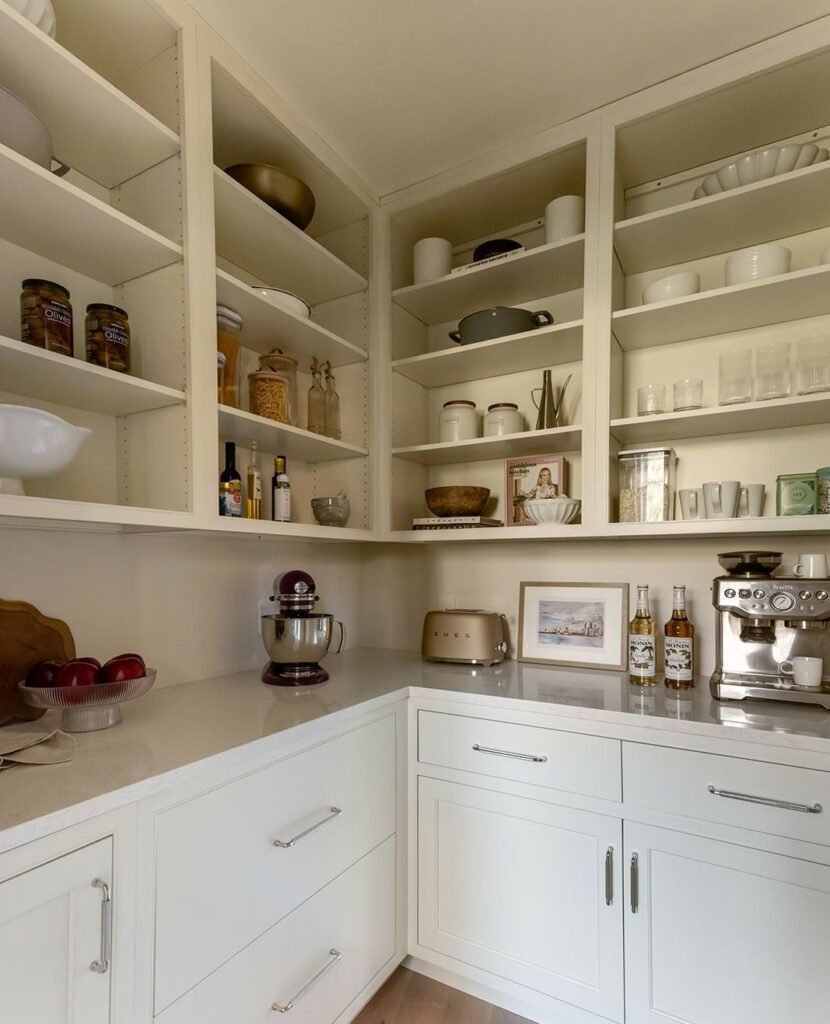

Kitchen pantry organization improves efficiency in everyday cooking routines. When ingredients are arranged logically, it becomes easier to plan meals, track food supplies, and reduce food waste. Organized shelves also make grocery storage faster and help maintain a
Many pantry organization ideas focus on grouping similar foods together, using storage containers, and maximizing vertical shelf space.
How to Organize a Kitchen Pantry
Empty the Pantry Completely
The first step in organizing a kitchen pantry is removing everything from the shelves. This makes it easier to clean surfaces and assess what food items are currently stored.
Checking expiration dates during this stage helps eliminate expired or unused products.
Sort Pantry Items into Categories
After clearing the pantry, the next step is grouping similar food items together. Common pantry categories include:
- Baking ingredients
- Canned foods
- Snacks
- Grains and pasta
- Breakfast items
- Spices and condiments
Clean and Prepare Pantry Shelves
Before returning items to the pantry, shelves should be wiped down and refreshed. Shelf liners can protect surfaces and add a clean decorative touch. This step also provides an opportunity to measure space for storage containers or baskets.
Use Clear Storage Containers
Clear storage containers are one of the most effective pantry organization solutions. They allow quick visibility of ingredients and help maintain uniform shelf arrangements. Airtight containers are particularly helpful for storing flour, rice, cereal, and other dry goods.
Uniform containers also create a tidy, minimalist appearance.
Arrange Items by Frequency of Use
Daily pantry items should be placed at eye level for easy access. Less frequently used ingredients can be stored on higher shelves or in deeper sections of the pantry.
Heavy items should always remain on lower shelves to improve safety and convenience.
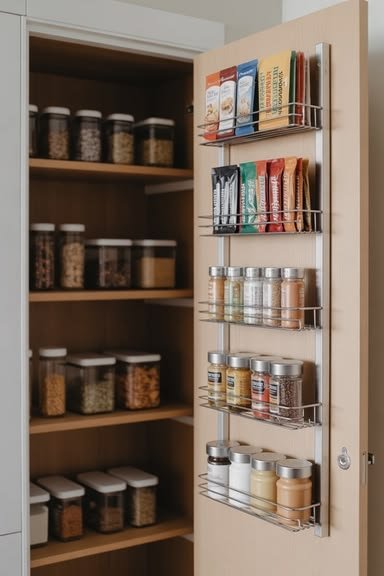
Use Door Storage for Extra Space
The inside of the pantry door is often unused but can provide valuable storage. Installing door-mounted racks or slim organizers creates space for spices, small jars, sauces, and snacks. This simple solution helps free up shelf space and keeps frequently used items within easy reach.
Create Zones for Different Food Categories
Dividing the pantry into zones makes it easier to find ingredients quickly. For example, one section can hold baking supplies, another for breakfast foods, and another for snacks. Clear zones prevent clutter and make it easier to maintain pantry organization over time.
Add Stackable Storage Bins
Stackable bins are useful for maximizing vertical pantry space. They allow multiple layers of storage without making items difficult to access. These bins work especially well for packaged snacks, pasta, or boxed foods.
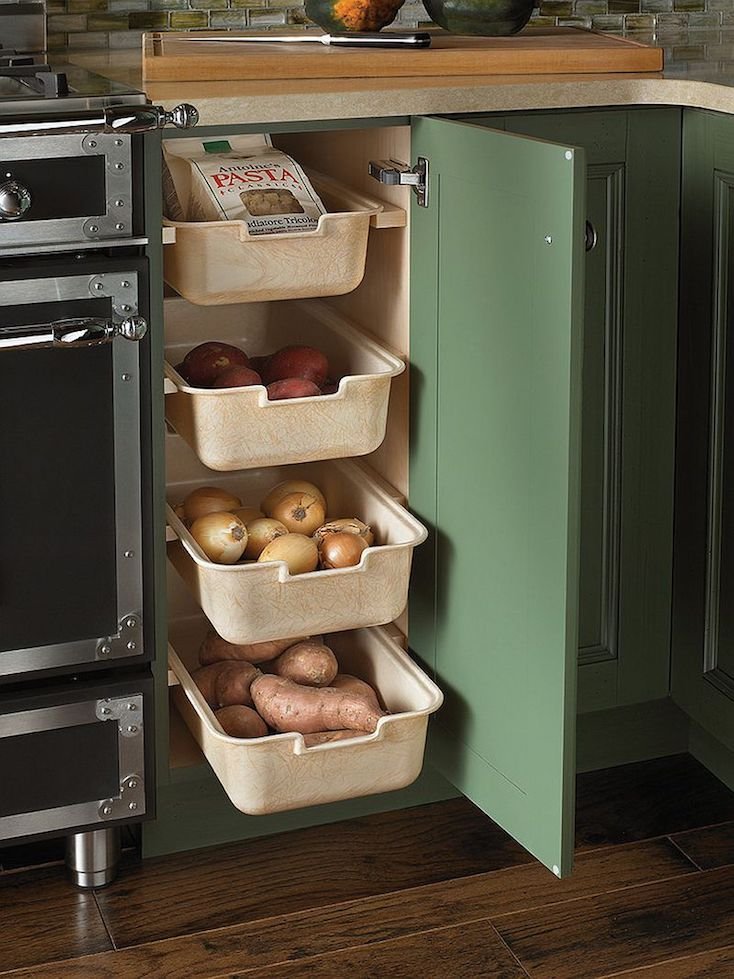
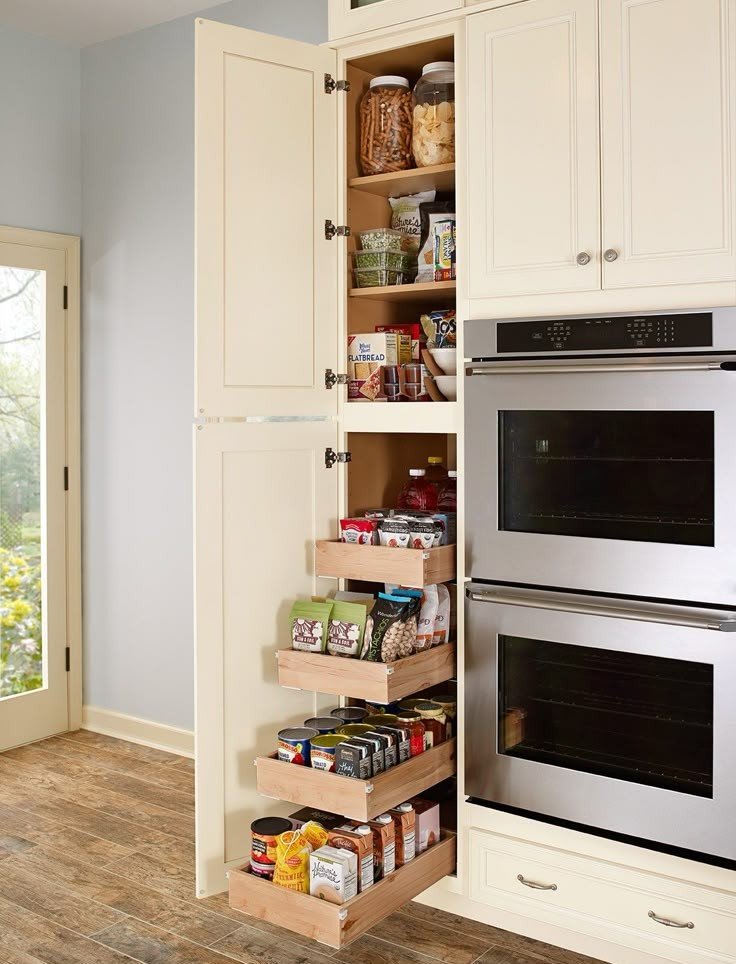
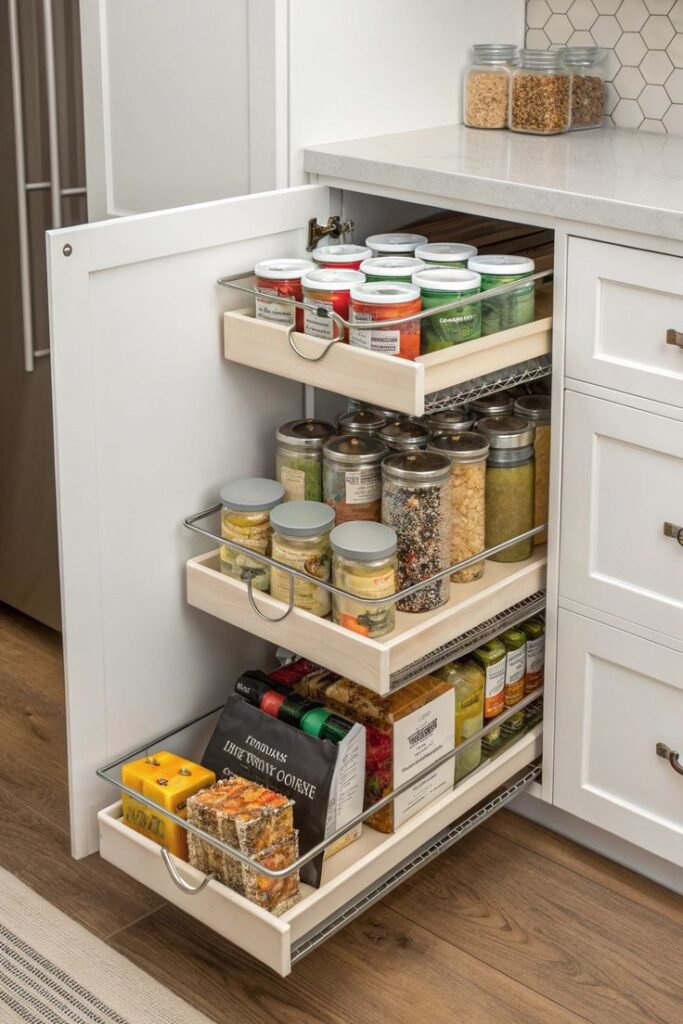
Install Pull-Out Pantry Drawers
Pull-out drawers or sliding shelves make it easier to access items stored at the back of deep pantry cabinets. Instead of reaching into dark corners, everything becomes visible and accessible with a simple pull.
Best Pantry Storage Solutions
Several storage tools can make pantry organization easier and more efficient.
Storage Baskets
Baskets help group smaller items such as snack packs, seasoning mixes, or baking supplies. They prevent clutter and allow items to be removed quickly when needed.
Tiered Shelf Organizers
Tiered shelves are useful for canned goods because they allow labels to remain visible. This prevents items from being forgotten at the back of the shelf.
Lazy Susan Turntables
Turntables are ideal for spices, sauces, and condiments. With a simple spin, everything becomes accessible without moving multiple containers.
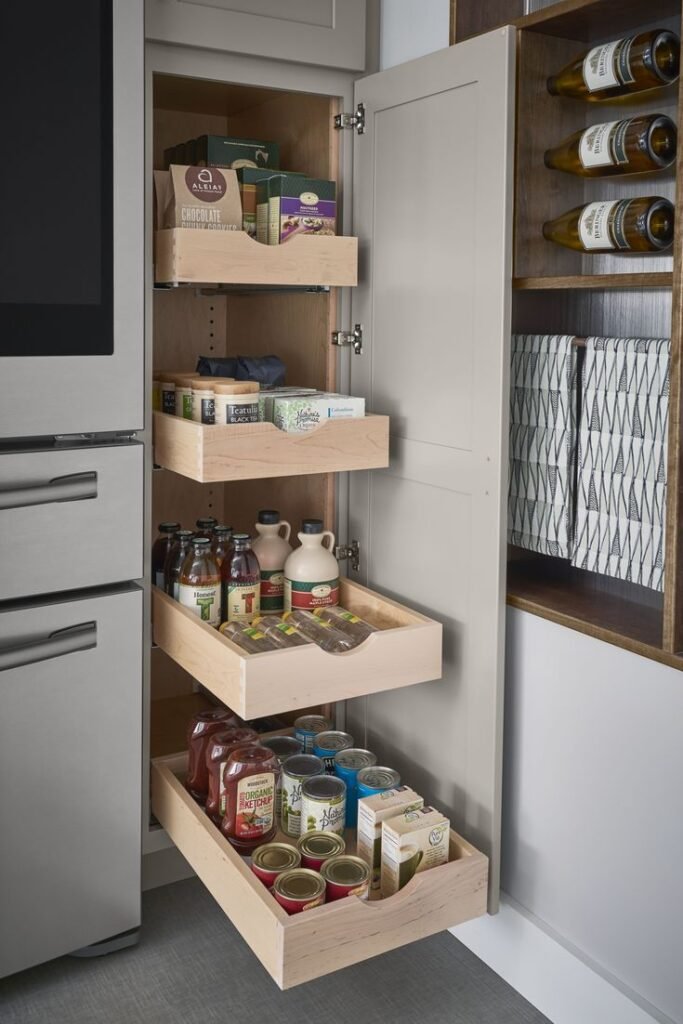
Pantry Organization Tips for Small Spaces
Even compact kitchens can maintain a well-organized pantry with the right approach. Small pantry organization often focuses on vertical storage and space efficiency.
Slim storage bins, stackable containers, and door-mounted racks help maximize every inch of space. Adjustable shelves also allow customization based on pantry size and storage needs.
Pantry Labeling and Categorizing Methods
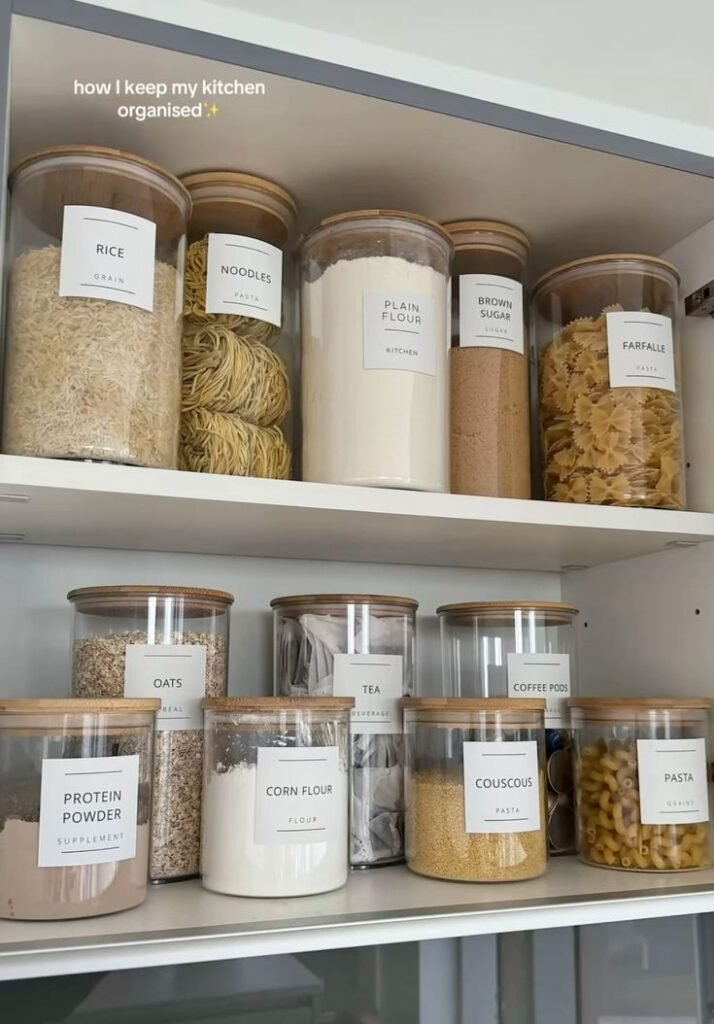
Labeling is an essential step in maintaining pantry organization. Clear labels help family members easily return items to the correct location.
Common labeling methods include:
- Printed pantry labels
- Chalkboard labels
- Minimalist adhesive labels
Maintaining a Well-Organized Pantry
Pantry organization is most effective when maintained regularly. A quick weekly check can prevent clutter from building up again. Rotating older food items to the front ensures that products are used before expiration.
Seasonal cleaning sessions also help maintain an efficient pantry system.
Conclusion
Learning how to organize a kitchen pantry can dramatically improve both kitchen efficiency and overall household organization. By decluttering shelves, grouping food categories, and using practical storage solutions, a pantry becomes easier to manage and more visually appealing. With a simple system in place, maintaining an organized pantry becomes a quick and manageable routine.
FAQs
What is the best way to organize a kitchen pantry?
The best method is to group similar food items together, use clear containers, and label everything. Keeping frequently used items at eye level also makes the pantry more efficient.
What containers work best for pantry organization?
Airtight containers made from glass or BPA-free plastic work best for storing dry foods like grains, cereal, and flour. Clear containers also make it easier to see when supplies are running low.
Why is pantry labeling important?
Labels help identify ingredients quickly and ensure items are returned to the correct place. This makes it easier for everyone in the household to maintain pantry organization.